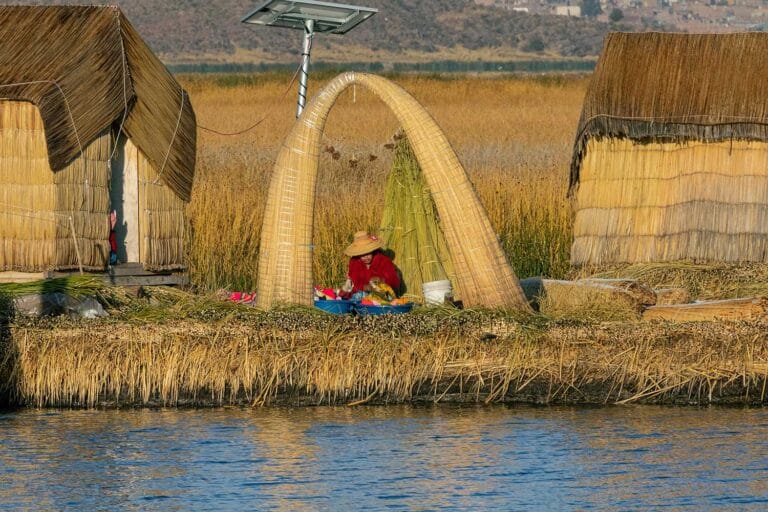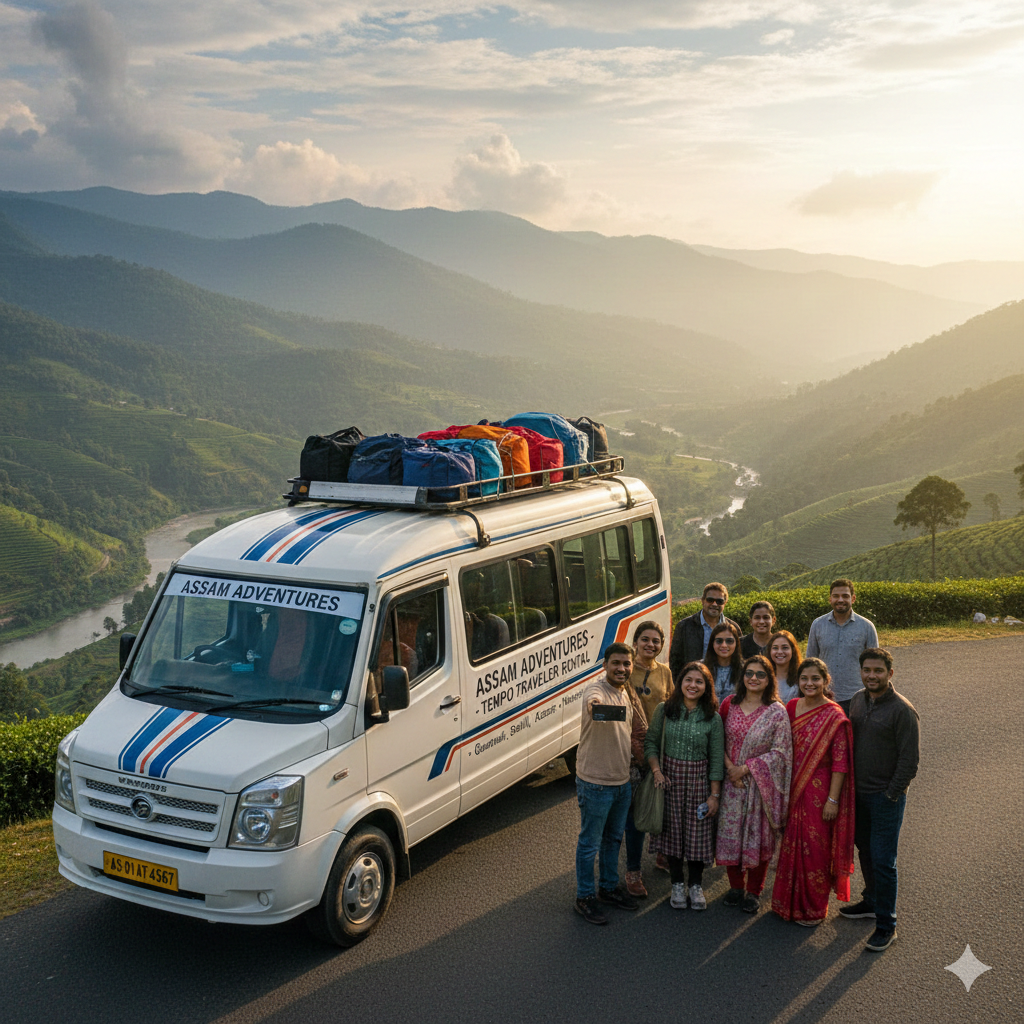

Northeast India, comprising Assam, Meghalaya, and Sikkim, is often called an underrated adventure beyondwildplaces.com. Remote and ethnically diverse, the region offers unique experiences “you can’t see anywhere else”beyondwildplaces.com: misty tea gardens and World Heritage parks, tribal villages with living traditions, and some of India’s most dramatic landscapes. It’s a place off the beaten path – far less crowded than mainstream destinations, beyondwildplaces.com, where ancient cultures and wild nature create an unforgettable travel experience. Whether it’s spotting one-horned rhinos at Kaziranga or hiking to Meghalaya’s double-decker root bridges, Northeast India rewards adventurous travelers with sights and experiences unlike anywhere else.
Top 10 Must-Visit Places in Assam, Meghalaya & Sikkim
1. Kaziranga National Park (Assam)
Kaziranga NP is Assam’s crown jewel and a UNESCO World Heritage Site. Home to two-thirds of the world’s one-horned rhinoceros, it boasts an incredible array of wildlife from tigers and elephants to Asian buffalo and swamp deer. Safari is the key experience: elephant-back and jeep safaris through tall elephant grass can yield thrilling rhino and tiger sightings. Kaziranga’s landscape is dominated by the Brahmaputra River, wetlands, and grasslands, giving visitors a true “natural empire” feel. The best time to visit is November–April, when the park is open and animals are active. Kaziranga is well connected: it lies 217 km by road from Guwahati or 95 km from Jorhat (the nearest airport), assamtourism.gov.in. Plan 2–3 days here to cover the main ranges and enjoy elephant safaris (booked in advance) and boat rides spotting river dolphins.
2. Majuli Island (Assam)
Majuli is the world’s largest river island on the Brahmaputra and Assam’s cultural heart. Often called the “cultural capital” of Assam, Majuli has been home to Assamese neo-Vaishnavite satras (monasteries) for 500+ years. These satras preserve Sattriya dance, folk theatre (bhaona), mask-making, and other art forms. Key attractions include visiting several traditional Satras (e.g., Auniati, Dakhinpat) to see priests and artisans at work, as well as village walks to meet tribal communities (Mishing, Deori, etc.) assamtourism gov. in. Majuli also has serene rural landscapes and rich birdlife. The best time is around mid-November during the Raas Leela, when elaborate Krishna performances light up the island. Majuli is reached by ferry from Nimati Ghat (near Jorhat), assamtourism.gov.in; Jorhat is the nearest city with good rail/air links. Staying in simple homestays or bamboo cottages adds to the charm of Majuli’s peaceful, cultural ambiance.
3. Guwahati (Assam)
Guwahati, Assam’s largest city, is the gateway to the Northeast. Perched on the banks of the Brahmaputra River, it offers both modern conveniences and historic sites. The iconic Kamakhya Temple (8 km from the railway station) atop Nilachal Hills is one of India’s most revered Shakti Peethas, drawing pilgrims and visitors. Other highlights include the Assam State Zoo and Natural History Museum, a cruise on the Brahmaputra at sunset, and the 16th-century Umananda Temple on Peacock Island (a short ferry ride). Guwahati’s cuisine (try Assamese thali or street snacks) and markets (Fancy Bazaar) add urban flavor. The city is best enjoyed in October–March when the weather is cool. Thanks to Lokpriya Gopinath Bordoloi International Airport and excellent rail/road links, Guwahati is a convenient start/end point for any Northeast trip.
4. Cherrapunji (Sohra), Meghalaya
Cherrapunji – officially Sohra – is famed as one of the wettest places on Earth, but it’s far more than rain. Towering green hills hide amazing waterfalls and living root bridges. The tallest plunge waterfall in India, Nohkalikai Falls (340 m), drops from a lush plateau into a jade pool. Nearby, the trek to Nohsngithiang (Seven Sisters Falls) and walks along the Khasi farm trails reveal panoramic viewpoints. Deep in the forest lie the living-root bridges at Nongriat (e.g., Double-Decker Bridge) – handwoven by locals from rubber tree roots. Caving enthusiasts can explore Mawsmai and Arwah Caves. The best time to visit is October–February, thomascook. in (post-monsoon, when the skies are clear and trails are safer. Cherrapunji is about 56 km (2–3 hours) from Shillong by road. Accommodations range from guesthouses to eco-resorts, and local guides can make jungle hikes safer.
5. Mawlynnong (Meghalaya)
Mawlynnong is a tiny Khasi village celebrated as “Asia’s cleanest village”en.wikipedia.org. It combines pristine beauty with cultural charm. Cobblestone lanes and bamboo dustbins reflect its commitment to cleanliness. The village is surrounded by green farmland and fruit orchards. Its star attractions are the living root bridge at Nongriat (Nohwet Bridge), an engineering marvel grown over generations, and Meghalaya tourism. In the Church of the Epiphany (a quaint century-old church with hanging gardens), Meghalaya tourism. In. Nearby, the Sky View Point, a tall bamboo tower, offers sweeping views over the Bangladesh plains. Mawlynnong’s sustainable village life (women’s matrilineal society, rainwater harvesting) is itself worth experiencing. Located ~76 km from Shillong, Meghalaya tourism. It’s accessed via Pynursla by shared taxi or tour vehicle. Travelers often stay overnight in homestays to soak in the village’s tranquility and night sky.
6. Dawki / Umngot River (Meghalaya)
Dawki is a border town on the India–Bangladesh line, famed for the Umngot River, often called India’s cleanest. The water here is so clear that boats appear to float on air, with the riverbed visible even under a meter of water. Boat rides or kayaking on the emerald Umngot are popular, offering surreal views of submerged rocks and swaying trees. The 1930s-era Dawki Suspension Bridge (a pedestrian bridge) is an iconic photo stop, especially framed against the lush river backdrop. Nearby attractions include the Krang Suri Falls (10 km from Dawki) and Mawlynnong Village (30 km back towards Shillong). Dawki is best visited in October–April when the skies are clear and the water sparkles. It’s about 90 km from Shillong via Jowai, typically reached by shared jeep or taxi; the town also serves as a transit point to Bangladesh via a suspension bridge.
7. Gangtok (Sikkim)
Gangtok is Sikkim’s vibrant capital and cultural hub. It sits at ~1,650 m altitude, offering cool mountain air and panoramic views (on clear days, Kanchenjunga looms in the distance). Top attractions include the centuries-old Enchey Monastery perched on a ridge, the quaint lakeside Ganesh Tok viewpoint, and the Buddhist Do Drul Chorten stupa (with rows of prayer wheels). The modern MG Marg pedestrian street is Gangtok’s heart – lined with shops, cafés, and restaurants – perfect for strolling in the evening. Gangtok is the gateway for Sikkim travel, with state transport and tour buses to places like Tsomgo Lake and Nathu La. The best time to visit Gangtok is March–June and September–October (post-monsoon), when flowers bloom and clear skies abound. Gangtok is reached by road from Bagdogra Airport (about 140 km) or via the nearest railhead at New Jalpaiguri (130 km).
8. Yumthang Valley (Sikkim)
Yumthang Valley is Sikkim’s legendary “Valley of Flowers,” an alpine wonderland near the town of Lachung. At 3,564 m elevation, it comes alive with colourful wildflowers (rhododendrons, primulas, poppies) every spring. The Shingba Rhododendron Sanctuary on nearby ridges blooms with over 40 rhododendron species in late spring. Sites include the Yumthang Hot Springs (warm sulfur pools under snowy peaks) and scenic waterfalls on the way from Lachung. About 150 km from Gangtok, the drive offers spectacular Himalayan vistas. Yumthang is best visited in April, justwravel.com when flowers are in full bloom (and also in Sept–Oct for autumn colors). Permits are required for foreign visitors beyond Gangtok. Visitors typically stay overnight in Lachung to acclimatize and enjoy local orchards and Monpa culture (Lachung monastery, markets) along with the valley.
9. Tsomgo Lake (Changu Lake) (Sikkim)
Tsomgo (Changu) Lake is a high-altitude glacial lake on the Gangtok–Nathu La highway, sitting at 3,753 m. Surrounded by snow-capped peaks, the lake freezes over in winter and changes colour from turquoise to deep blue with the seasons. A small Shiva temple on its shore and yak rides add to the experience. Tsomgo is considered sacred by locals, who watch its changing hues for omens. The lake is just ~40 km from Gangtoken.wikipedia.org. Combine this trip with a stop at the Nathula Pass (5 km further east, see below). Foreign tourists need an Inner Line Permit for the Tsomgo area. The best time to visit is late spring to early autumn (May–Oct), when the lake is ice-free. Icefest celebrations in January (when the lake freezes) are a special cultural event if you venture in winter.
10. Nathu La Pass (Sikkim)
Nathu La is a historic mountain pass on the Sikkim-Tibet (China) border, at 4,310 m elevation. Part of the ancient Silk Road, it was reopened to tourists in 2006. A day-trip from Gangtok (about 52 km) takes you into the Himalayas along a border zone. Visitors cross a frontier on foot, see relics of the 1962 war, and gain 360° views of snow peaks (weather permitting). Key tips: travelers must obtain a special permit (arrange via tour operators), and allow an extra day or two in Gangtok/Lachung to acclimatize to the altitude. The pass is closed in winter due to snow, so the ideal visiting window is mid-May to early October. This borderland experience, with its stunning vistas and unusual atmosphere, is a unique finale to any Sikkim adventure.
Travel Tips & Sample Itinerary
Best seasons: Generally, the cool, dry months (October–March) are ideal for Northeast India. Assam and Meghalaya see heavy monsoons (June–September) that can disrupt travel. Sikkim’s mountain weather makes late spring and autumn (Apr–June, Sept–Oct) best for clear skies and flower blooms. However, winter (Dec–Feb) is great for wildlife safaris in Assam (Kaziranga) and for visiting places like Dzongri in Sikkim if you’re into cold.
Getting there: Major gateways are Guwahati (Assam) – well-connected by flights/rail to all of India, and Bagdogra/Gangtok (Sikkim) – with flights to Siliguri or Pakyong (Sikkim). Roads link all destinations, but expect long drives on hilly terrain. Assam’s Kaziranga is a 4a –5-hour drive from Guwahati. Shillong/Cherrapunji are ~3 hours from Guwahati by road or bus. In Sikkim, shared cabs and private taxis ply between Gangtok, Lachung, and Pelling/Lachung.
Permits: Indian nationals generally travel freely in Assam and Meghalaya, but Sikkim requires a (free) Inner Line Permit, easily obtained on arrival in Gangtok or via the online system. Foreigners need special permits for some parts of Sikkim (e.g., Tsomgo Lake, Nathu La); these can be arranged through travel agents in Gangtok.
Local culture: Pack modest clothing (especially for temple visits). Assam and Meghalaya have vibrant indigenous cultures – try local Khasi/Assamese cuisine (bamboo shoot curries, thukpa), attend a tribal cultural program if possible, and be respectful of tribal traditions. English is widely spoken, but learning a few Assamese or Khasi pleasantries can be fun.
Sample itinerary (10–12 days): Start in Guwahati (Assam) – visit Kamakhya Temple, then drive east to Kaziranga for 2 days of safari. Next, take a ferry to Majuli (1–2 days), ssamtourism.gov.in. Fly/drive to Shillong, Meghalaya – explore Shillong, Elephant Falls, and nearby Mawphlang Sacred Forest. Head to Cherrapunji (2 days) for waterfalls and root bridges. From Cherrapunji loop to Mawlynnong and Dawki (2 days). Then cross into Sikkim via Bagdogra: spend a day in Gangtok (monasteries, markets)audleytravel.com. Proceed north to Lachung/Yumthang (2 days)justwravel.com, then back via Tsomgo Lake (1 day)en.wikipedia.org and Nathu La Pass (day-trip)en.wikipedia.org. Return to Gangtok, or head west to Pelling/Geyzing (if time permits), then out via NJP or Bagdogra.
Travel guides: When planning, use a Northeast India travel guide or local tour operators. Assam Tourism and Meghalaya Tourism websites have helpful info and itineraries. Apps like Sikkim Tourism’s official app provide permit info and travel tips. Pack for rain in Meghalaya (waterproofs) and for cold in the hills (layers, sunscreen). Finally, remain flexible – landslides or protests can happen, so leave wiggle-room in your schedule.
Northeast India’s Assam, Meghalaya, and Sikkim together form one of India’s most rewarding travel circuits. From UNESCO parks and sacred groves to Buddhist monasteries and tribal villages, they offer experiences for every curious traveler. With this guide to the top attractions and practical tips, you’re well-equipped to explore the top 10 must-visit places in Northeast India and create memories that last a lifetime.